
What If Your Home Appraises Below the Offer? A South Miami-Dade Seller's Guide
 Jenry Rodriguez Gonzalez
· 5 min read
Updated October 25, 2026 | Home sellers in Pinecrest, Homestead, Cutler Bay and surrounding South Miami-Dade communities.

You accept an offer on your home. The buyer is moving ahead with financing. Then the lender's appraisal comes back below the contract price. Does that mean you must reduce your price, or that the sale is over? Neither outcome is automatic. The right response depends on the loan, the contract, the buyer's available funds and the deadlines everyone agreed to.
A low appraisal is a negotiation and financing problem to solve, not a verdict that your property cannot sell. Here is a practical seller-focused guide to the choices.
What is a low appraisal, and why does it matter?
An appraisal is an independent opinion of a property's value, often ordered by a mortgage lender. It is different from a home inspection, which focuses on condition. An accepted purchase price reflects an agreement between buyer and seller; the appraisal informs whether the property supports the requested loan. The Consumer Financial Protection Bureau explains the appraisal's role and why buyers receive a copy.
For many conventional purchase loans, Fannie Mae's loan-to-value calculation uses the lower of the purchase price or appraised value. If the appraisal is lower, the lender may reduce the loan amount relative to what the buyer expected. See Fannie Mae's published loan-to-value guidance. Individual loan programs and lender decisions can differ.
A simple appraisal-gap example
Imagine a $500,000 contract price and a $475,000 appraisal. If the buyer's financing is limited to 80% of the value used by the lender, the maximum loan in this simplified example changes from $400,000 (80% of $500,000) to $380,000 (80% of $475,000). If the price stays at $500,000, the buyer would need $120,000 toward the purchase instead of $100,000: $20,000 more, before closing costs and other requirements.
The appraisal shortfall is $25,000, but the extra cash required in this 80%-loan example is $20,000. That distinction matters. The actual numbers depend on loan-to-value limits, mortgage insurance, lender underwriting and available funds. This example is not a loan quote or an estimate for any particular home.
Does a Florida seller have to lower the contract price?
Not simply because the appraisal is low. Whether a buyer may cancel, request a change or continue under the original price depends on the signed agreement, any appraisal rider, the financing contingency and applicable deadlines. Florida Realtors' July 2024 financing-contingency guidance distinguishes a lender-satisfactory appraisal within financing approval from a separate appraisal-to-price contingency under an optional rider. Sellers should have their agent and, when needed, a Florida real estate attorney review the actual contract rather than assume all low appraisals work alike.
Five practical ways a seller can respond
1. Review the appraisal and supporting comparable sales
Ask the buyer's agent and lender what information can appropriately be shared. Compare the report's property facts with verified records: living area, permitted improvements, condition, lot characteristics and recent comparable sales. If material information was missed or recorded incorrectly, the buyer may be able to ask the lender about a reconsideration of value. The Office of the Comptroller of the Currency explains the correction process. Sellers should not attempt to influence the appraiser or assume a challenge will change the conclusion.
2. Negotiate the price using evidence, not emotion
A lower price may keep an otherwise strong transaction together, but the decision should reflect the property's market position, the buyer's readiness, the cost of relisting and your estimated proceeds. Compare any proposed reduction against the likely costs and delay of returning to the market.
3. Explore whether the buyer can bring additional funds
A buyer with verified available funds may choose to cover some or all of the financing shortfall if their lender permits it. Do not assume that a preapproval alone proves cash is available. The buyer's lender should explain the revised loan structure and any requirements.
4. Consider a documented compromise
Sometimes the parties agree on a smaller price adjustment combined with additional buyer cash or another lawful, lender-approved change. Seller credits and concessions can have loan-program limits; they are not a substitute for every appraisal gap. Any agreed change should be documented properly and reviewed with the closing and lending professionals.
5. Protect the contract deadlines and your next steps
Do not let appraisal discussions distract from financing, notice and closing deadlines. If no solution works, the parties' rights and deposit treatment come from the actual contract and applicable law—not from a blanket rule that every low appraisal allows cancellation.
How to reduce appraisal surprises before accepting an offer
Before listing, compare recent closed sales with today's active competition and document meaningful property improvements. When reviewing offers, look beyond the highest price: consider financing terms, verified buyer resources, appraisal-related provisions, contingencies, proposed seller concessions and timing. A strong offer is one with a credible path to closing.
A thoughtful pricing strategy can help, but no real estate agent can guarantee an appraised value. For more about preparation and pricing, see my guides to selling in Pinecrest, selling in Homestead and selling in Cutler Bay.
What should South Miami-Dade sellers pay attention to?
In Pinecrest, substantial renovations, lot characteristics and distinctive features may require careful documentation and selection of comparable sales. In Homestead, nearby developments, property type, association restrictions and financing expectations can affect which comparisons are meaningful. In Cutler Bay, accurate roof, permit, insurance and flood-related information may help buyers and lenders evaluate a home. These are preparation considerations, not claims that appraisals in any one city are necessarily low.
Seller questions, answered
Can I challenge the buyer's appraisal?
The buyer normally works through their lender. You can organize accurate property records and potentially relevant sales to share through the proper channels. Federal regulators issued interagency reconsideration-of-value guidance on July 18, 2024 to support processes for addressing appraisal deficiencies. A reconsideration is not guaranteed to produce a higher value.
Should I accept the highest offer if the buyer needs financing?
Not automatically. Review the whole package, including financing, appraisal provisions, buyer readiness, closing dates and net proceeds. A slightly lower but more dependable offer can sometimes be better than a high price with significant financing uncertainty.
What if the appraisal is equal to the price?
That generally removes this particular financing obstacle, but it does not eliminate inspection, underwriting, title or other contract issues. Keep the transaction moving through its remaining milestones.
A useful next step before you list
If you're planning to sell in Pinecrest, Homestead or Cutler Bay, I can help you evaluate comparable sales, presentation, offer terms and a realistic plan before the appraisal becomes a last-minute surprise. Start with my Sell Your Home page or request a personalized home-value review through my website. To compare possible net proceeds under different prices, try the Seller Net Sheet Calculator.
Jenry Rodriguez Gonzalez, REALTOR® | Coldwell Banker Realty | FL Lic. SL3622462
Educational information reviewed October 25, 2026. This article is not an appraisal, loan approval, legal advice or a guarantee of transaction results. Contract rights, lender decisions and property facts must be verified for each transaction.
Sources and image credit
Primary references: Fannie Mae Selling Guide — LTV Ratios; Florida Realtors — Financing Contingency FAQs (July 2024); CFPB — Understanding Appraisals; OCC — Disagreeing with an Appraisal; FDIC — Interagency ROV Guidance (July 18, 2024).
Featured image: licensed stock photograph by RDNE Stock project via Pexels. The photograph illustrates a real estate paperwork discussion; it does not depict Jenry Rodriguez or an actual client transaction.
Thinking of selling your home? Get a property-specific plan for pricing and preparing your home.
Request a home-value review Cómo vender una casa con paneles solares en el sur de Miami-Dade: guía para propietarios
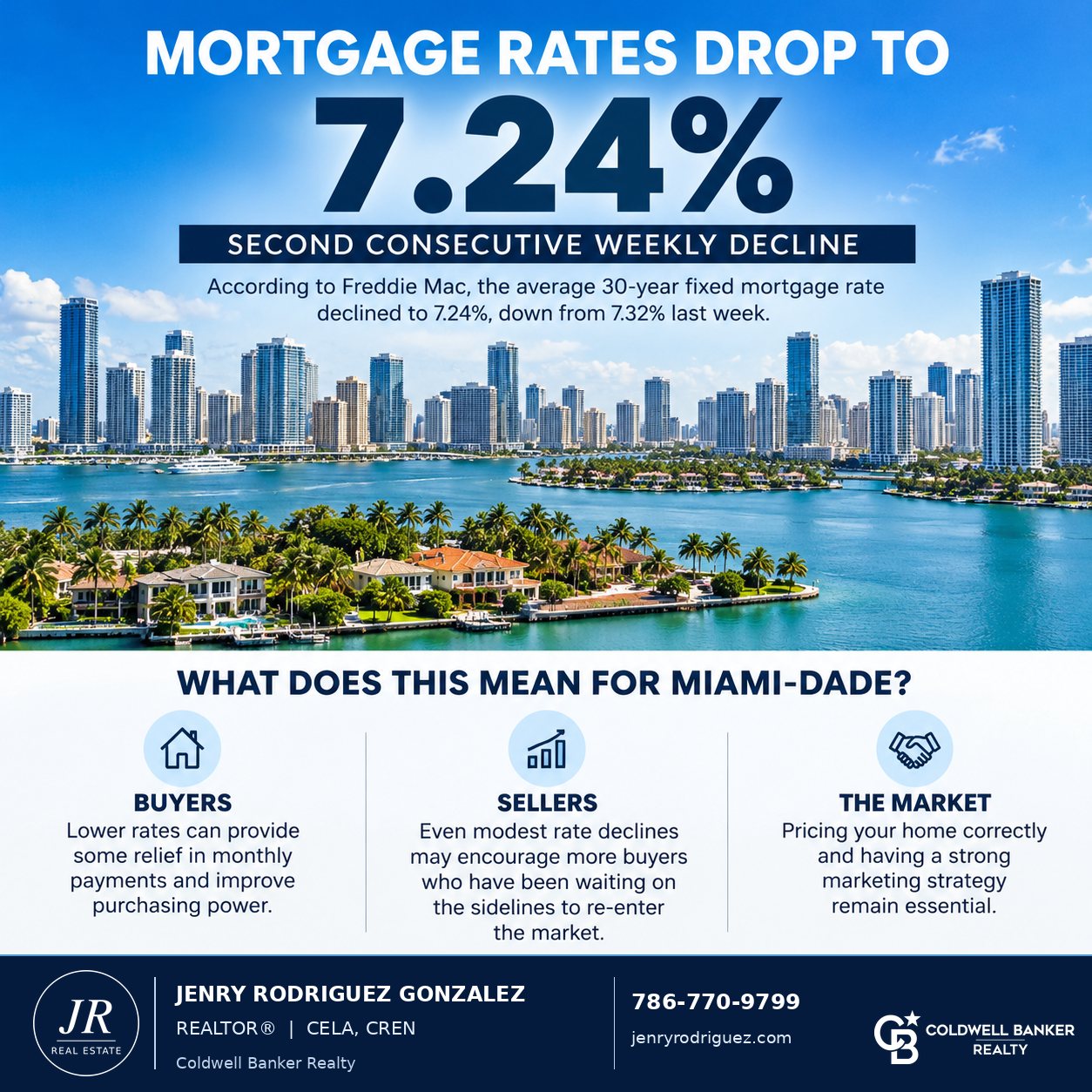 Mortgage Rates Fall to 7.24%: What Miami-Dade Homeowners Should Know